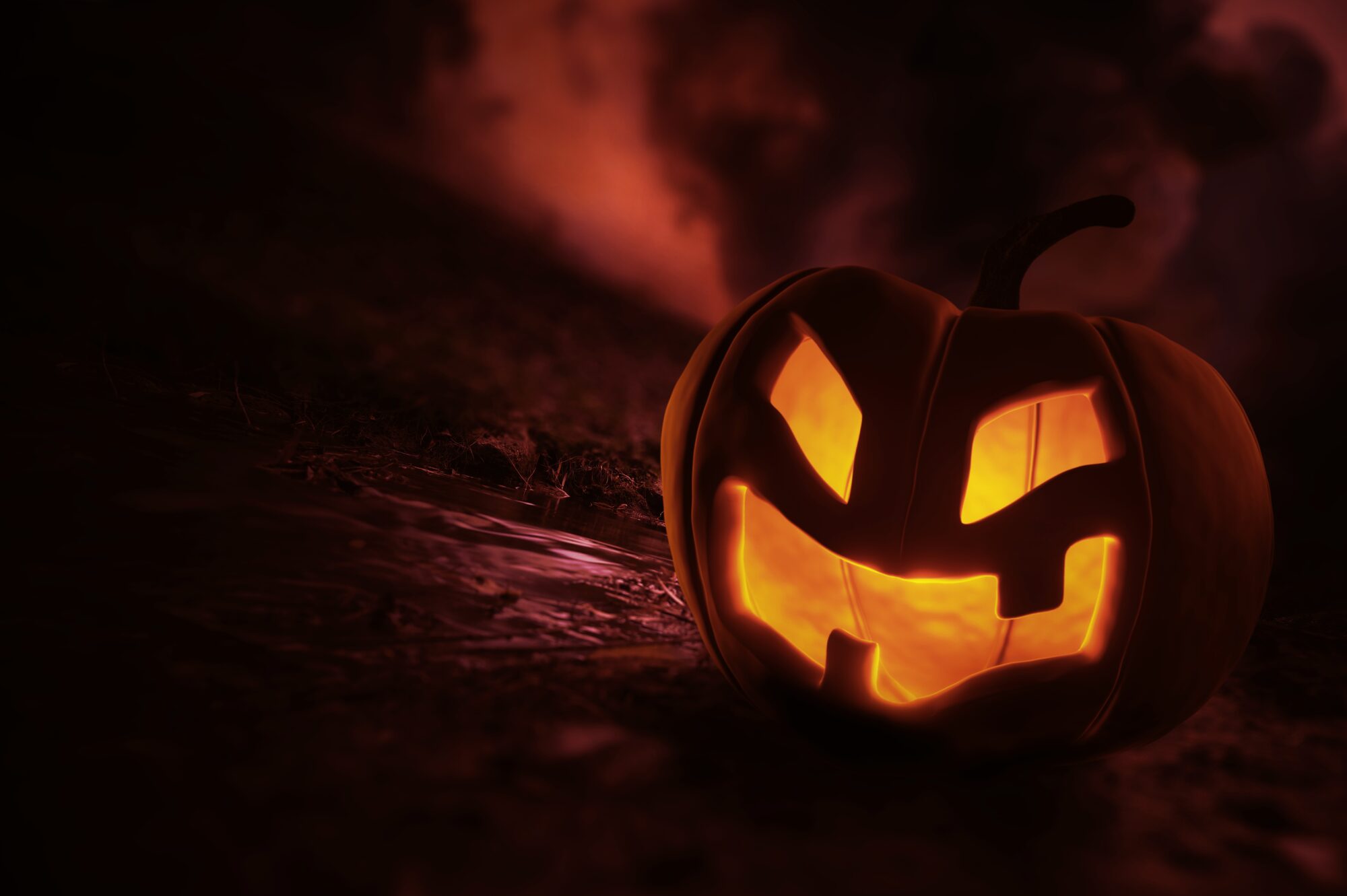
Why do we celebrate darkness when it is light that nourishes and heals us? Why do people dress up as demons and the dead instead of honoring eternal life?
Halloween, once a festival of transition and inner purification, has degenerated into a spectacle of commerce and fear—a reflection of our times, in which humanity seeks the light but consumes the shadows.
The spiritual origin of Halloween—Samhain, the festival of transition.
Long before plastic masks, skeleton costumes, and horror films dominated the scene, Samhain (pronounced "Sow-in") was a sacred moment in the Celtic calendar. It marked the end of the old year and the beginning of a new cycle—the threshold between summer and winter, life and death, the visible and the invisible.
On this night, the Druids believed, the gates between the worlds opened. The souls of the ancestors returned home to be blessed, and the fires on the hills of Ireland were meant to banish the darkness and ignite the light within. Samhain was not a festival of fear, but a ritual of remembrance, letting go, and inner transformation.
Lights were lit not to frighten, but to guide—the souls of the departed on their journey to the light.
Like the Indian festival of Diwali, which often falls within the same period, Samhain symbolized the eternal interplay between darkness and enlightenment.
From Ritual to Commerce –
The Degeneration of a Festival
. Today we are witnessing the opposite. Halloween has become the stage for a fear industry – an aesthetic of horror that generates millions in revenue with blood, zombies, spiders, and demons.
What was once spiritual and transcendent has become a show of shadows, a projection of a society that has lost its sacredness.
An absurd example is the new profession of the so-called live scare actor – people who are paid to frighten others.
They lurk in amusement parks, at Halloween events, in haunted houses – and make a living by staging terror.
What was once a symbol of transformation has become the professional simulation of horror – a grotesque parody of the deep psychological significance of fear and death.
C.G. Jung wrote:
"He who looks outside, dreams; he who looks inside, awakens."
But modern Halloween culture does not look inward, but outward – into the glaring darkness of commerce, where fear becomes a commodity and shadows become entertainment.
Playing with Fear – A Perfidious Pedagogy.
Fear is sold in modern society – in news, advertising, films, and social media. Halloween is merely the most harmless form of this. Yet it follows the same pattern: fear attracts. It activates our oldest instincts – fight, flight, freeze.
And so, children today celebrate what they once feared – ghosts, monsters, death. A game considered harmless is, psychologically speaking, an alienation from our inner light, a trivialization of shadow work. For instead of understanding and transforming the darkness, we learn to disguise it, consume it, and imitate it.
As a metaphor, we can express it this way:
“Darkness has no independent existence. It disappears as soon as the light is kindled.”
But who profits from darkness today? Industry. It sells us darkness in cans, fear as an event, and calls it fun.
The Return of the Light – The True Meaning of Transition:
Samhain was never a festival of demons. It was a gateway. A gateway through which humankind – after the harvest season – returned to itself. A moment to honor the year, life, and ancestors before the darkness of winter arrived.
This darkness was not evil, but necessary – like night for sleep. It was the silence in which light is reborn.
Just as the Diwali festival in India celebrates the light of the soul, which shines even in the deepest darkness, Samhain was a reminder that light and shadow are not enemies, but partners in the game of life.
The poet Rumi wrote:
“The wound is the place where the light enters you.”
This is the true meaning of this time of year: not to identify with monsters, but to find the inner light in the darkness.
A Society in Shadow
When a society dedicates itself professionally to frightening, when children worship demons and adults celebrate darkness, then the collective consciousness has strayed far from its origins.
Halloween shows how deeply we have lost our way in a world of surfaces – a world where fear becomes glamorous and light is ridiculed.
Yet the solution lies in simplicity:
Light a candle.
Say a prayer.
Remember the ancestors .
Accept darkness as part of life – but don't use it as a toy.
Between Fear and Awakening
Halloween could be a gateway to self-knowledge – an evening when we look at our shadows in order to redeem them. But in its modern form, it has become a mirror of a culture that has lost the sacred.
Let us reclaim this gateway – not through masks, but through awareness.
Not through fear, but through light.
For the true celebration of life takes place not in terror, but in the realization:
Light has no need to fear darkness. It is enough that it shines.